Friday, August 17, 2007

Moving on - reading, watching and a little writing

First I’d like to thank Amanda, Nicki, Jane and Anonymous for their encouragement after my last post. Sometimes it’s hard to know whether anyone reads what I write here or whether it’s just a means of me hearing my own thoughts. It’s cheering to get such positive comments.

I’m still reading a lot – I’m on the last few chapters of “Harry Potter and the Deathly Hallows” which I’m enjoying immensely but am reluctant to finish– and I’ve been watching some interesting movies. The one I was most impressed with was “A Love Song for Bobby Long” based on the book “Off Magazine Street” by Ronald Everett Capps. The movies stars John Travolta as a larger then life, ex-academic currently drinking himself to death in New Orleans with his best buddy and former student Gabriel Macht, until their lives are changed by the arrival of Scarlett Johansson. All of them give remarkable performances that are displayed to perfection by the skill of the director. I fell in love with the movie and I’ve ordered the book.

The reading and the movies got me thinking and I’ve started another story, a follow on from a piece I did a while back called “It may not be art, darling, but it pays the bills” which sits in the Treasure Chest at ERWA. It was about an English ex-RADA (Royal Academy for the Dramatic Arts) student making a grunge porn movie. It was a humorous, dick-in-cheek piece that debunked porn. At the end of the story, our heroine, who has a strong preference for women, despite the hetero scene she’s just been through, takes solace in the fact that her next movie is a lesbian piece. It was a throw-away line at the time but recently I’ve been wondering what the lesbian piece was and whether the reality of it would have been as comfortable as her expectations of it. So now I have almost completed a story called “Licking Little Nell”. I’ll keep you posted when it’s done.

In the mean time, I thought you might be interested in seeing a recent flasher of mine called “Driftwood” and the first part of a longer series of stories called “In Jack’s Hands”. It hasn’t been posted or printed anywhere yet and may need some revision after the next parts are written. I’d love hear what you think of it.

"Driftwood" © Mike Kimera 2007


“Desire always outweighs the consequences,” he said

With neither shame, nor regret, nor pride

But a bone-deep certainty, as final as the grave.


Glad of the all-concealing darkness, I replied

With soft kisses, deft touches, and low sighs;

Perfume sprayed to hide the smell of rot and fear


Deepening the darkness, he covered me once more

His hard hot hunger filling me and consuming him

With flames that showed me only guilt-filled shadows


He peaked, I spasmed, our lust crashed onto the shore,

Then his sticky tide ebbed, beaching me like driftwood,

Hollowed-out, abandoned and praying for freedom from consequences


In Jack’s Hands

© 2005 Mike Kimera. All rights reserved. Do not reproduce without written permission from mikekimera@yahoo.co.uk

Jack’s wife is younger than me. His “She’ll-be twenty-two-next-April”child-bride is almost young enough to be my daughter; certainly young enough to be his. I think about that sometimes when I’m alone in this bed that he pays for.

She’s his second wife of course; his first left him once their children were grown. She’d left his bed long before that. Perhaps she’d sensed my presence there, like perfumed sweat on the sheets. She is the kind of woman who would rather starve than share a plate.

It had amused me at first, when he’d taken me to their bed, then taken me on it, riding me with my legs spread wide and my ankles held high, not so much screwing me as nailing me to the bed, making me cry out with every swing of his hammer.

Back then I’d assumed my youthful form was the source of his vigour. Now, when I remember how, leaning over me, soaked with sweat and pink with effort, he closed his eyes just before he came; I wonder who he imagined spilling into, me or his wife?

It’s not in Jack’s nature to be faithful. He’s a strong, slightly selfish man who takes what he wants and expects the rest of us to do the same.

He took me the first time that we met, ten years ago.

I was twenty five, had just moved to London after a lifetime in the frozen North and was determined to enjoy myself in the big bad city. I had a good body, a great smile and a very sexy little black dress that would get me in to almost anywhere.

That evening my dress and I were at a cocktail party in an expensive gallery in South Kensington. I’d come because I knew there’d be free champagne and rich young men, not all of whom could be gay. To my surprise the art turned out to be more interesting than the men: large bronze figures of naked women. These were not the fantasy nymphs of mass-produced, middle-class, middle-brow, masturbation-art, but real women with imperfect bodies naturally posed, that I thought were intensely sensual.

I found myself walking around the figure of a slightly heavy woman who was lying on her side. She had that just-come look. Everything from the trace of a smile beneath her closed eyes, through to the way her top leg lay slightly in front of the other, told me that she was resting in post-orgasmic warmth, though whether from her own fingers, that rested on her soft belly just below her hips, or through a good fucking, I couldn’t say. How she got to her afterglow didn’t matter. This piece was about how she felt when she arrived and the answer was very clear: entitled to be there.

Without thinking about it, I reached out to stroke the smooth line of her thigh, half expecting to feel warm skin beneath my fingers. I’d just reached her hip bone when someone very close behind me said: “I could never resist touching her either.”

I whirled around, hiding my hands behind me and blushing as if I’d been caught shop lifting.

I recognized Jack at once. His picture had been in the entrance to the show, above a sign saying “Jack Cavanaugh: Artist”. The head and shoulders shot had captured the strength of his forty-something face but it hadn’t shown how big he was up close. He was a foot taller than me and with shoulders so wide that I couldn’t see beyond him to the room full of people. It felt like there was just me and him and the naked woman behind us. I should have taken that for an omen.

“The eyes lie,” Jack said.

I felt his eyes roam over me like a skilful tongue, from my thighs, up my belly, lingering for a second on the free motion of my breasts, along the smooth length of my neck and finally up to my mouth. It seemed to me that I was already naked in front of him. It had been a while since I’d been naked in front of anyone. My body was telling me that I liked the idea.

“But touch always tells the truth.”

Jack took a step towards me, bringing him so close now that I could smell him: an alcohol top-note and a hint of Bulgari over a strong base of warm male. It was a scent that made me want to inhale deeply.

The lust in his eyes excited me and I tilted my head up, waiting for the first kiss. I didn’t know then that Jack never does the predictable thing.

He leant forward but instead of kissing me he took hold of my wrist and placed my hand back on the hip of the bronze. “Her name is Angie,” he said, “and she likes to be touched.”

Jack put his large hand over mine and traced the curve of Angie’s belly up to the fullness of her breast. In the process he turned me around so that I was facing her and he was pressed up against my back.

I knew I should say something but I had no words. All my concentration was on the surface of my skin: my fingertips on the cold bronze nipple, Jack’s hard hand on mine, the heat of him behind me. No words passed my lips but my whole body was broadcasting, “Fuck me. Please.”

Jack pushed forward, pressing his chest against my back. I shivered and pushed back into him.

“Close your eyes,” Jack said, “let your fingers tell you all you need to know.”

I cupped the bronze breast gently, imagining the weight of it in real life. Jack placed his other hand on my ribs, just below my breasts. It felt as if he was burning me but I wanted to move towards the fire, not away from it.

“Feel the how her breast fills your hand. Imagine it heavy, firm, hot and responsive. Run your thumb over the nipple and feel her shudder with pleasure.” With Jack’s hand on mine I could almost believe that the warmth came from the bronze beneath me. I’d never wanted to touch a woman but I found that I liked the idea of Jack making me caress Angie.

“I like my hands to know a woman before I sculpt her,” Jack said, sliding his hand over my breast and cupping it. “My hands tell me the truth about who she is and what she wants.”

To my acute embarrassment, when Jack’s thumb grazed my lightly clad nipple, I groaned with pleasure.

It was, I think, the signal Jack had been waiting for.

“Don’t let go of Angie,” he said “and try not to make too much noise.”

Jack wrapped his arm around my chest, squeezing me until it was hard for me to breathe. I could feel his erection, hard and hot, against my arse. I parted my legs in anticipation.

I was in a public place with a man who hadn’t even asked me my name and yet I was ready to bend over and let him fuck me in any hole he could reach. It was insane and intoxicating and out of my control. My legs were tensed, my eyes were closed. I was waiting impatiently for him to fuck me.

Of course Jack didn’t fuck me; he was too controlling for that. He fed my hunger rather than sating it.

Taking his hand off mine he slid it gracefully up my thigh, under my short dress, over my hipbone and then down between my legs. When he closed his wide hand over my cunt it felt like he was claiming territory.

Pushing upwards, Jack lifted me up onto tiptoe, pressing me into his erection, bending me closer to Angie. I waited for his strong fingers to force their way into me, wondering if they’d hurt and if I’d care but he didn’t enter me.

He didn’t even move my panties aside. He massaged me through them, working my labia and clit with a skill that had me breathless in seconds and made me come in less than a minute. Then he let go and stepped away from me.

I slumped against the bronze, my head almost resting on Angie’s ample arse, waiting for him to continue. Looking behind me in what I hoped to e a provocative way, I saw Jack, smiling and holding his fingers to his nose.

“I’d like to do you,” Jack said calmly, making no move towards me “You’d make a fine bronze.”

I couldn’t believe Jack’s arrogance. He had my juice on his fingers and he was talking to me as if we were having a coffee. I pushed myself upright, one hand on Angie’s thigh and moved towards him.

“Perhaps, I could persuade Angie to pose with you. You look so suited to one another.”

That’s when I tried to slap him.

I’d never hit a man before. I’d never hit anyone. But he’d made me so angry that I wanted to smash his smug bastard face so that he could never smile again.

I put all my strength behind the blow. He caught my wrist in midair and held it tight. He was still smiling so I let fly with other hand. He caught that one as well. Then with great speed and apparent ease, he forced both hands down and held them at the small of my back.

“Bast…”

My words were stifled by his kiss.

I should have bitten him or kicked him or both, God knows he deserved it, except I was too busy discovering how much I liked being held totally helpless by a large, powerful man who kissed me as if it was his right.

My eyes were closed when I heard that distinctive upper-class throat-clearing sound that expresses disapproval and mild irritation without requiring words to be wasted.

A tall thin man stood behind Jack. He was in his thirties, casually dressed but with a “groomed by others since birth” finish that spoke of breeding and not just wealth.

Jack let go of my hands but did not move away from me.

“The Culture Vultures are waiting to be fed. These people are too well-educated to touch a sculpture. They wait for someone to explain it to them so that can tell their friends why buying my work cost them so much money.”

Jack stepped away from me and turned towards the tall man.

“Campion, give this woman the address of my studio and set up an appointment for a session when the dragon lady is away.”

Jack moved towards the crowd that was waiting to hear him speak. Without looking back he said “Oh and Campion, find out her name for me.” Then he was gone.

“You can take your hands from behind your back now.” Campion said.

Although Jack had released me, I was still standing as if bound. I refused to let myself be embarrassed. I held out my hand towards Campion and said “My name is Tracey Muir.”

Campion shook my hand briefly but politely. His skin was soft and dry. His face was carefully neutral.

“This is Jack’s address, Ms Muir,” Campion said handing me a card. “You can have your session with him any time from Wednesday noon onwards. If you call that number, we’ll send a car for you.”

Campion started to turn away from me to follow Jack. I wasn’t ready to be dismissed. Some of the anger I should have directed a Jack splashed onto Campion instead.

“Are you always, Jack’s pimp, Campion?”

He turned to face me, looking at me properly for the first time. He smiled.

“I see Jack has found a brave one. Jack can sense bravery from fifty paces. The only thing I always am, Ms Muir, is Jack’s brother. In anycase, I believe the role you were casting me in was panderer rather than pimp.”

He stepped towards me, moving close enough so the he could speak without the possibility of being overheard. I wanted to step back but I didn’t want to look weak so I stayed put.

“Jack will be forty next week. You are somewhere in your twenties I would guess. Jack has been married for most of your life. His oldest child has just gone up to Oxford. You wear no wedding ring. Jack is a selfish, domineering, intensely passionate man who eats young women before breakfast. You need to decide who you want to be before Jack casts you in bronze. And now, like a good brother, I must join the crowd in time to applaud Jack for being Jack.”

He left before I could think of anything to say beyond “Fuck you” which was in danger of sounding like an offer in the circumstances.

That night I lay in bed, thinking over the encounter. So Jack was a married man who ate young girls before breakfast. It sounded like a good way to work up an appetite to me. Besides, the idea of fucking a married man had a certain illicit thrill to it. And it placed a limit. If he had a wife then things could never get too serious.

I didn’t want serious. Not then. Then I was twenty-five and he was a good story I would tell one day to shock my daughters. “I once bedded a sculptor you, know – very good with his hands. Even better without them.”

I decided to conclude my day with a reprise of Jack’s finger fuck. I rolled over onto my belly, closed my eyes and slid my hand into position trying to imagine Jack’s weight on top of me. Annoyingly I couldn’t get anywhere near the level of arousal that Jack had produced. My own hand felt more like Campion’s than Jack’s. An image popped into my head of me, naked, hands bound behind my back, sitting on Jack’s lap with my back to him and his cock up my arse and Campion standing in front of us, face carefully neutral, waiting to applaud Jack for being Jack. My arousal peaked and I fell asleep determined to visit Jack on Wednesday.

Monday, August 06, 2007

Before and After 50

It’s been my habit for the past six years or so to produce ten to twelve stories a year that get posted somewhere. In practice that meant that I was usually working on a couple of stories at a time and that I would do some writing almost every week day.

In the latter-half of 2006, I slowed down. I told myself I wanted time to write some longer pieces – I’ve had a novel called “Way of the Courtesan” part way through for what seems like forever and I wanted to try and move it forward. I still haven’t finished it. But I have slowed down even further.

I checked today and the last two complete stories that I posted were in July and August of last year (“Christmas with Mary and Suzie” which made it into “He’s on top” and “Handjobs” which will be in the next “Best New Erotica”). Since then, all I’ve done is produce fragments – starts to longer pieces – revisits of older pieces – some flashers.

I’d like to say that this is a planned fallow period to allow for reflection and a refresh of my style.

The reality is that my life has sucked for the past year and I’ve had no energy left over to write with.

I turned fifty in January. Since then I’ve been ill with something non-life threatening but depressing. In true male style I left going to the Doctor for longer than was wise and now I need minor surgery. Nothing dramatic, but just enough to add to the general sense of that I have my own personal Dementor following me around.

Fifty is not middle-aged – no one in my family has ever lived to 100 – most die before seventy. Fifty is one of those “If you haven’t done it yet, it’s less and less likely that it’s ever going to happen” ages.

I’m of that generation for whom TA meant Transactional Analysis not the Territorial Army. I knew the colour of my parachute and how many habits successful people had – I even knew who moved my cheese and what I was going to do to the bastard when I found them, so I decided to put my psycho-babble facility to good use and review my life.

The results were as cheery as “Broken Flowers” or “Lost in Translation”.

Somewhere in my forties I really lost the plot. For a decade I’ve been largely absent from my own life – too many nights alone in hotels – too many hours working – not enough achieved to justify either – Dido’s “Life for Rent” came to mind as an apt description.

I have very few friends. I’ve never needed as many people as those around me seem to but I’ve now reached the point were the only person I care about in my life is my wife. And she’s the one I disappoint most often.

I’m just received the permit that allows me permanent residence in Switzerland. Instead of being a cause for celebration, I found myself wryly amused at the fact that permanent doesn’t imply as long as it used to and I began to be torn between whether to settle here or go back to the UK.

None of this is big stuff. I’m not dieing. I’m not in pain. I’m not alone. I’m not unemployed and penniless. I’m just not happy.

Convention has it that unhappiness is food to the artist’s muse. I’m clearly no artist. Unhappiness settles on me like a weight on my chest from the moment that I wake up.

If you’ve ever been in pain as a result of an injury, you’ll know how the pain is always with you.


It’s the first thing you are aware of when you wake. It’s the thing that keeps you from sleeping. You spend your day nursing it like a lover. You relish any distraction that makes you forget the pain but you know that most distractions are now beyond you.

Your life becomes about coping, about living with or despite the pain. But you know this is not a battle you win. Each day you grow more tired, less interesting, less engaged with anything but the pain itself. You become someone that it is not pleasant to spend time with. You have mood swings ranging from anger to unstoppable tears, both equally futile.

Well, unhappiness has the same effect on me as pain.

I’d hoped that writing could be my morphine but it turned out that writing needs me to be full of things that are bursting to get out, not drained of everything except self-pity. So I’ve been reading. I was a reader long before I wrote anything. The books help. They give me little time and space not to think about being unhappy.

I know I should be pulling myself together. The problem is that I’ve spent the past ten years pulling myself together and I only now realise that I was actually pulling myself apart.

This morning I picked up a pencil – something I only do when I know I’m headed for more thinking than writing – and slowly printed out the heading “THINGS I WANT TO DO BEFORE I’M 60”. Then I sat there. After an hour the page was still unsullied but I had learnt something. I’d asked myself the wrong question. Doing things is not the answer. Not at all.

So I rubbed out the heading and replaced it with “WHO I WANT TO BE”.

Now that’s an interesting question. That’s the kind of question that makes the unhappiness recede a little. I realised that the unhappiness comes in large part from a gap between who I am and who I want to be and that the unhappiness stays because I have no answer to who I want to be other than not the person who I am. I am not proud of anything much. I don’t love anything much. I don’t want anything much. Except… I’d like to be someone I like and respect.

At that point I put the paper aside and reached for the keyboard.

What I wrote is not autobiographical – my life is too ordinary to make good fiction - but it captures something of how I’m feeling. It’s not really prose and I’m not skilled enough to turn it into poetry, but I wanted to share it here because it helps me walk around the question “WHO I WANT TO BE” and get some perspective on it.

One thing I do know about WHO I WANT TO BE is that the answer includes “Someone who writes things worth reading” so I’m going to turn back to writing for a while. I’ll keep you posted on how that goes

Before

(C) Mike Kimera 2007

Before I’d fucked my first stranger because she was near and warm

Before I’d paid to fuck my first whore because she was on offer and I had an itch to scratch

Before I’d let pornography fly-post my imagination with images that break people into parts and holes

Before all that there was Cassie

Who looked at me as if

the sun rose and set on my smile,

all the heat and heart of love was at my fingertips,

I was and always would be, all she desired

Cassie, who smelt of sunshine and cotton and tasted of honey and salt

Cassie, who had thick, heavy hair that she let me lose myself in

Cassie who kissed and caressed and sighed but who wanted us to be virgins in our wedding bed

Cassie, who was more than I deserved and less than I could live with

Cassie,who I walked away from without a backward glance, refusing to acknowledge, in the soft sadness of her sobbing, my own loss.

Now I ache for the wholeness of before, itch beneath the barnacles of after and pray for the strength to close gap between who I am and who I could have become.

Tuesday, January 09, 2007

My Top Ten Writers of 2006

On New Years Day I took some time out to look back on which authors I had enjoyed reading in 2006. I know how anorak that would sound to the non-reader but I’m sure present company will understand the quiet pleasure to be gleaned from browsing my shelves, handling the books again, recalling when I read them and what it felt like and placing the best of them on a table for closer inspection. This is the avid reader’s equivalent of the sports fans “review of year” show: which recall the best plays of the year.

At the end of my browse I realised that all the books on my table were genre novels: Crime, Science Fiction and Fantasy, and Fiction for Teens:

I love genre writing because it proposes a very specific contract between writer and reader. The writer will structure the novel within a formal framework that the reader knows well and will demonstrate their mastery of it but will also seek to innovate in ways that surprise and delight. The reader will read with attention, applying their knowledge of the genre to try and guess where the writer is going, picking up small nuances and references that add salt to the meat of the writing, and mentally applauding a well executed move or a new idea. The genre reader and the genre writer have the same kind of relationship as the audience at the Proms has with the orchestra: they share a language and a sensibility that allows them to appreciate each other.

I always read a lot of genre books but in most years there are two or three mainstream books that I want to pass on to others and say, “Read this, your life will be richer for it”. This year the genre books had crowed out the mainstream, perhaps because I’d found some new authors and had gorged myself on their back-catalogues. I confess myself guilty of binge-reading. So here’ my top ten writers for 2006:

Crime

Harlan Coben: especially “The Innocent” and “Deal Breaker”

Lindsey Davis: “See Delphi and Die

Janet Evanovitch: “Eleven On Top” and “Twelve Sharp

Barbara Nadel: “Dance With Death” and “Last Rights

Sara Paretsky: “Fire Sale

Science Fiction and Fantasy

E.E. Knight: The Vampire Earth series, starting with “Way of The Wolf

Maureen McHugh: “Mission Child

Terry Pratchett: “Going Postal” and “Thud

Children’s Books

James Patterson:Maximum Ride: The Angel Experiment"

Philip Pullman: “Northern Lights”, volume one of the “His Dark Materials” trilogy

Seven of my Top Ten are writers that I’ve enjoyed for many years. They are like old friends who make you smile just by being there. I enjoy seeing how they’ve grown, what they still do well, what new things they’ve added. Some of the authors have worked with the same characters for many years. The risk is that the characters get stale and the plot lines get thin, but the best of them avoid these traps and keep things evolving.

There are three “new” authors on my list: Coben, Knight and Pullman. They are new loves you are infatuated with. Everything about them is fresh. They renew my faith that there are others out there who see the world in interesting ways and have the passion and skill to bring what they see to life.

My first new discovery of the year was E. E. Knight, creator of the “Vampire Earth” series. I took the opportunity to visit Barnes and Noble when I was on a business trip to Atlanta. They were promoting vampire books of all kinds. I picked up a few, put back the Ann Rice wannabees, and was left with a modern Vampire in story, set in the world or rock music, raves and SoHo art galleries that turned out to be fun but didn’t make the Top Ten and a book called “Way of the Wolf”. This book looked like a Western, was part of a Vampire series and was set in post-apocalyptic future USA. The cover alone was enough to make me want to put it back, but most US covers for SF and Fantasy books have that effect on me so I decided to give it a try. As it was part of a series, I took the next one, “Choice of the Cat” with me; just in case I enjoyed this seemingly over-rich mix. Within a couple weeks I’d ordered the rest of the Vampire Earth series, including the latest hard-cover volume.

In the Vampire Earth series Knight manages to create a frightening future where bad things happen to good people and sometimes good people do terrible things. In Vampire Earth action and inaction both have a price and the characters carry the scars of paying it. Knight understands war from the point of view of the soldier fighting it. He also understands war from the point of view of the Quisling profiting from it. Give the books a try. The early ones are fresh and engaging. The later ones are grim and compelling.

My next find was Harlan Coben, a crime writer out of New Jersey (What is it with New Jersey that it produces so much crime fiction and rock music?). My wife bought me “The Innocent”, one of Coben’s more recent books. The plot is complex without being incredible. There are lies within lies. And, something that appealed to the wordsmith in me, the meaning of the title kept changing as the book went on. What I was most impressed by was Harlan’s understanding of what secrets do to your life and that innocence, once lost, can never be regained. I tried a few more of his later books, all good reads but perhaps too heavily plotted and too violent. Then I went back to his early stuff and discovered a character called Myron Bolitar in “Deal Breaker”. Myron is an ex-athlete; ex-FBI agent turned Sports Agent who also gets pulled into detective work in league with his psychopathic ex-partner. This is classic gum-shoe territory and it’s delivered with wit, pace and a lightness of touch that I admire greatly. I liked the main character because he was surprising, complex and human. The book felt real, dealt with unpleasant things but still had a redemptive flavour that generated hope. The next book in the series is on my shelf, waiting to go.

The last new author on my last is the most exciting: Philip Pullman. Pullman is labelled as a writer of fiction for children but, like Rowling or Lewis or Nesbit, what he writes will capture an adult audience as well as shaping the way that a generation of children think. I’ve just finished “Northern Lights” (“The Golden Compass” in the USA), the first volume of “His Dark Materials” trilogy. I received the boxed set of the trilogy as Christmas gift from my wife and it certainly ranks as the best gift of the year. How many men approaching fifty would get a set of children’s books as a gift from their wife? I’m a lucky man to be known so well.

Everything about Pullman’s writing works: dialogue, world-building, action scenes, plot, character development are all masterful. But the exciting thing is that this mastery of craft is harnessed to a bold imagination, a passionate belief that how we treat children defines the worth of our society, a bone deep understanding of the nature of fear and courage and love and how inextricably they are linked and a willingness to address big themes that integrate physics, theology, politics and moral philosophy without ever leaving the reader behind. Pullman is never overtly didactic yet he can explain elemental particles and collapsing probability curves in a simple sentence or two

The heroine of “Northern Lights” is a young girl who Pullman describes as more prone to action than imagination. If her imagination was stronger she would not be able to act because she would be overwhelmed by an understanding of how hopeless her situation was. She is powered by a sense of mischief, loyalty to those she loves, and the need to act when she can. When she is overcome by fear, she gives way to it and then moves on because she must. Children will delight in this book. Adults will be left in awe of it.

OK, that’s my gush of first loves over with. Let me share the other authors with you.

Crime

Lindsey Davis: “See Delphi and Die”. I’ve been reading Davis’ books about Falco, a Roman informer, since the “Silver Pigs” back in 19XX. I associate them with slow, warm days on summer vacations. Davis’ plots are normally an excuse to explore a particular aspect of the Roman world. This one is about the tourism and Greek sports, and murder of course. There is always at least one murder. Davis has developed not just Falco but his wife and their family into engaging figures that we feel we know. Her research fuels the books but never spills over into a History Channel special. If you like Falco books, you’ll like this one as well.

Janet Evanovitch: “Eleven On Top” and “Twelve Sharp”

Janet Evanovitch, another New Jersey crime writer, has created a wonderful comic character in Stephanie Plum; the world’s most sassy and least competent bounty hunter. I enjoyed the first four or five Stephanie Plum books enormously but by book nine it looked like the idea was running thin and with book ten I almost gave up but books eleven and twelve bring Evanovitch back on form. Even if you’ve never read any of these books about the Trenton-based bounty hunter, these two books will have you laughing in no time.

Barbara Nadel: “Dance With Death” and “Last Rights”

I’ve read all of Nadel’s books about a Turkish Police Inspector called Cetin. I think they are some of the best police books in print. Nadel lets her character’s grow. Time passes for them from book to book. Each book tackles something about Turkish society. Her plots are strong and her writing is clean. “Dance With Death” the latest book in this series, would have been enough to get her into my Top Ten but what really delighted me this year is her new book “Last Rights”, set in the London Blitz and introducing Francis Hancock a shell-shocked survivor of the Great War who runs the family funeral business in the East End. Hancock is frail and magnificent: broken, brave and haunted. The world he inhabits is nightmarish and convincing. A good part of the fascination of this book is the depth of knowledge of the East End of London in 1940. I look forward to more books set here.

Sara Paretsky: “Fire Sale”

When I first read Paretsky’s V.I. Warshaski books in the 80s, it was a novelty to have a kick-ass female detective. VI was the embodiment of feminism, tough, competitive and fashionably dressed. Paretsky and VI have both grown up since then. Paretsky’s books have moved beyond feminism into a more politically aware exploration of the issues of justice, power and the unequal treatment of the rich. Paretsky’s writing is clean and clear. She creates memorable characters and sends a strong message without preaching. I left my copy of “Fire Sale” on a plane when I was three chapters in. It took me two months to track down another in Switzerland but I couldn’t leave the book unfinished. “Fire Sale” looks at the impact of organisations like Wal-Mart on the people who work for them and it pulls no punches.

Science Fiction and Fantasy

Maureen McHugh: “Mission Child”

In a bookshop you’d find it in the Science Fiction section. In your heart I think you’d file it under „The truth about learning to live with being foreign“.

This is a book full of sadness. It is not one of those SF books that are filled with irrepressible optimism about the transformational power of technology, yet this is a redemptive quality theme in it.

The main character loses everything, her family, her clan, her identity, everything except her life. She comes to know the loneliness and isolation and tension of being foreign, of having a sense of yourself that no one will ever understand in the same way that you understand yourself. And eventually she comes to understand what it means to come home.

This told in clean simple first person prose, stark and true, that has an emotional power that seems as inevitable and unstoppable as a monsoon rain.

Terry Pratchett: “Going Postal” and “Thud”

Pratchett’s Discworld novels get better and better. Although his work is thought of as comic, at the heart of every novel is a serious idea. You get to the idea through complex plots, comic one-liners, and the conflicting perspectives of familiar characters. “Going Postal” looks at what is good and bad about the entrepreneurial spirit. “Thud” examines the hatred and misunderstanding across racial and religious divides. Both of them will make you laugh, lift your spirits, and keep you turning the pages but what lingers after you close the book is the sense that the world is more complicated than we choose to admit and that we should admit that choice is the most important thing we have.

Children’s Books

James Patterson: “Maximum Ride: The Angel Experiment".

I got to know Patterson through his novels about Detective Cross: ingenious, violent, fast-paced thrillers that translate well to film.

"Maximum Ride" is one of his books for teens. Still a thriller. Not so violent but the violence that there is not glamorised. Very fast-paced. It's about a group of kids with wings who have escaped from the lab they were mutated in and who are being chased by were-wolf like Erasers".

This is a fun, easy to read, rapidly paced, action book that makes you think, makes you like the players, and never ever has you skipping text.

As I read it's like have wind under your wings -you soar on Patterson's skill. He never wastes a word and he never fails to deliver.

Saturday, December 09, 2006

Adventures in Hairdressing - a bio piece from 2001

I wrote this bio piece before I had a blog. I think it still stands up so I thought I'd share it here.

Adventures in hairdressing

(c) 2001 Mike Kimera All rights reserved. Do not reproduce without written permission from mikekimera@yahoo.co.uk


Last week I went to get my hair cut and, as I waited for my turn in the chair, I reflected on how my tastes have changed over the years. No, I don't mean that I wear different hairstyles (although I have at times been through everything from ponytail to military style brushcut) but rather that my taste in hairdressers has changed.


For years I used to go to a fancy salon. Remember when exposed brick walls with halogen spotlights and lower case chrome lettering logos were cool? I would sit on a sofa upholstered in whatever that year's fashionable contrast colour was (this year the salon is in lilac and white with chrome contrasts of course). The staff would remember my name, serve me espresso in ridiculously small cups and play the same CDs that I'd been thinking of buying that week. My hair would be washed and my scalp massaged by strong gentle fingers. No chitchat, just personable women being nice to me as I sat in a comfortable chair in a softly lit room. The haircut itself was almost secondary to the "haircut experience". How 90s that concept now seems.


Then, almost 3 years ago, it all started to feel cloying, too sheltered and packaged. I found I had become impatient with it. For my last haircut I went to Supercuts "no appointment, no credit cards, no fuss". I could come here four times for the cost of one trip to the other salon. The ambience is more launderette than salon; strip lighting in plasterboard ceilings, plastic chairs and radio tuned to the local commercial station "GWR bringing you the better music mix with sounds from the 80s, 90s and today" as well as 15 minutes of ads for every hour of broadcasting. Bland bands for bland lives. You take a number and wait for your name to be called sitting on hard plastic chairs placed too close together and marked "for customers only".


But here's the thing. They cut my hair well. I don't get coffee and the staff turnover is too high for anyone to remember my name. I find that I no longer want the haircut experience. I just want my hair cut with no fuss so i can get on with other things. I think it is a trend. A move away from the over serviced 90s to whatever the next thing turns out to be; the informal functionalism of the 00's?


Back in the early 80s, when I was 24, in my first job after college, I once had a completely different haircut experience. In those days I was slim, maybe 150lbs, chest only 38", my cheekbones not yet offset by the slabsided face cheeks I was left with after contracting mumps in my 30s, the bald patch at the back wasn't even a trend and my hair started lower down on my forehead than it does now. When I looked in the mirror I just saw someone who most people's eyes just passed over.


Looking back at the photos I can see that I looked young, gentle and just a little androgynous. I also used to wear tight jeans and no underwear. It's surprising how easy it is to tell that just by looking at the photos.


I was working in Croydon, an old town raped by the planners of the 70s and turned into a concrete, soulless wasteland. I went to what we then called a unisex salon but where most of the customers were still women.


One of the hairdressers led me into a back room, equipped with one sink and two chairs but away from the heat and stink of perms and dyes. She was taller than me, a little over 6 foot, dressed in a skinnyribs roll neck and a tight fitting dogstooth mini skirt that descended into dark wool stocking that were somehow erotic in a girlish way. Her dark hair was cut short in a boyish sideparted style not dissimilar from my own. She had small high, apparently unsupported, breasts that I wanted to touch and tried hard to deny the existence of. She was probably a few years older than me.


I was intensely attracted to her and so tried not to look at her directly and didn't speak to her at all. Only the pressure of my cock struggling to readjust the denim surrounding it showed my interest. It never occurred to me that she would notice this.


She sat me in the chair and put a gown over me. Then she lowered the chair and tilted it slightly backwards. This was odd but I was too busy watching her in the mirror to pay it any attention. She started to cut my hair. Slowly. Her long fingers would frequently rearrange my hair before cutting it. She was standing very close to me. I could smell her. She smelled as if she had just woken up. I closed my eyes. I love that smell. Then she touched me.


Her fingers were on either side of my head repositioning it, when I felt her touch her pubis or belly, I couldn't be sure which, against the back of my head. I didn't say anything. I kept my eyes closed. She continued to cut and continued to rub.


I was educated if inexperienced (nothing much has changed) I knew what this was called. Frottage. How typical of the French to have a word for getting off by rubbing against something, or someone. I knew the word but I'd never felt the effect. It was electric. I allowed my thumb, concealed under the gown, to trace my erection. The contact with my head was constant, just persistent. It could almost have been accidental.


After a slightly longer than usual period of non-contact I opened my eyes. In the mirror I could see the lines of the skinnyrib jumper distorted by her erect nipples. She was watching me. We made eye contact. She said, touching my hair at the temples "Is that what you wanted?" "Um yes. Thank you. Very nice." I said and felt her pubis on the back of my head once more, just resting. "Do you want anything in it?" she said running one hand backwards through my hair "Gel? Blow dry?" I was sure she was laughing at me now although it didn't show in her face or her voice. I declined the offer.


She righted the chair, removed my gown and started to brush hair from my collar. As she leant forward from behind to brush hair from off my shirt front I realised three things: she could have done the task more easily from in front of me, her nipple was grazing my head, she was looking at the small damp stain on my jeans.


She led me back to the main room. I wasn't thinking straight. I couldn't quite take in what had happened. She gave me her card at the till. Her fingers brushed my hand as she passed it over.

I came back 6 weeks later (I know, I was an idiot) and was told she didn't work there any more. Did I imagine her movements? Had it all been innocent? Was she running another service on the side? Did she, perhaps, find me attractive? How pleasant it is to be able to ask but not to answer those questions


(c) 2001 Mike Kimera All rights reserved. Do not reproduce without written permission from mikekimera@yahoo.co.uk

Monday, November 27, 2006

The three Fs of story writing

Writing is a refuge from my day-to-day, deadline-driven, write-to-order world of management consultancy. It’s a deadline-free, non-goal-oriented zone where I try to make no demands on myself other than to write good stuff on the day – whatever that turns out to mean.

I don’t mean to give the impression that I’m careless about what I write - one of the joys of writing is that it takes my full attention - I only mean to say that I am not writing to a schedule.

The combination of having a compulsive need to write and no pressing requirement to publish means that I always have several unfinished stories on my C Drive at any given time. As of this morning, my WIP file (Work In Progress file – hey, I’m a management consultant, of course I have a WIP file) has thirty stories in it.

When I feel the need to write, usually when I’m away from home on business, often in the early hours of the morning, I open up my WIP file and browse the stories until I feel one call to me, demanding completion.

Sometimes I’ll open a story, make some progress or do some tidying up and then pop it back in the WIP file until the next time it calls to me. Sometimes I open story after story without stirring my own interest. Then, if I’m lucky, a new story will push its way to the front of my mind. If I’m very lucky, most of the story will be in my head already, waiting to spill out over the keyboard. The only question then is whether I can write for long enough to get it all down before the creative tide ebbs.

But most new stories aren’t like that. They give up little pieces of themselves, like young girls wearing clothes that hide and display at the same time. I capture what I can- plot, dialogue, imagery, character - and leave myself clues about what I haven’t yet seen – what might happen next, how the characters feel, phrases they might use, images that aren’t yet connected to the body of the text. Think of them as jig-saw puzzle pieces that have been selected because they’re probably pieces of sky but you can’t link them yet and besides they might turn out to be part of the ocean.

Recently I’ve been trying to figure out what it is that gets some stories completed while others remain as creative driftwood, just attractive enough for you not to want to throw them away but not really useful for anything.

For those with an editor to placate, bills to pay and a deadline to meet, I suspect the answer is focus and will power. That’s how I turn my words into cash in my day job.

I’ve been looking for a different solution for writing stories: one more in keeping with my dilettante motivations. It seems to me that sailing provides the metaphor here. Sailors go where the wind blows. The speed they travel at and their ability to choose a course depends at their skill on harnessing the wind and their ability to navigate.

I need to find a way of harnessing the creative breeze so that it will carry me further and with greater control.

So, being a management consultant, I analysed the data and developed a hypothesis. Don’t worry, I won’t be using gant charts or PowerPoint slides.

I decided that there are three parts to writing a story and I couldn’t resist the alliterative opportunity of having them all start with F.

So here are the Mike Kimera 3 Fs of story writing: Finding, Fixing, Finishing

Finding is about the new, the joy of the blank page, the endless possibilities of beginnings, the buzz you get from making new connections to old ideas. Finding involves reaching into the great swirl of stimulus and response just below the conscious surface of my mind and pulling out things and making patterns. It’s a little like fishing – you need to be still and calm so as not to spook your prey and it helps if you can cast a hook to catch them on. Finding is also a little like fresco painting: you have to act boldly before the plaster dries and nothing more can be added. I Find best when my mind is open and my emotions are engaged and when I feel so full that if I don’t write something I will burst. I Find badly or not at all when I’m empty or jaded or tired or depressed. If I keep trying to Find when that mood is on me I either come away empty-handed or I fool myself into seeing silver where there is only tin. In the first case I feel sterile and talentless and in the second I feel foolish and frustrated.

When the glamour of the initial Find wears off you realize that sparkle alone is not enough. A good story structures imagery, dialogue, character, plot and pace to create something coherent, something that presents the sparkle effortlessly. The structure is something that should not draw attention to itself but is absolutely fundamental to what’s going on.

One of the reasons that a story lingers on my C Drive is that the underlying structure is broken. Something doesn’t work. The next piece of the story refuses to be grafted on to what went before or else simply refuses to reveal itself. This is where Fixing comes in.

Fixing is an ineffable process; a hybrid born of craft and intuition. A sculptor was once asked how she turned a piece of rough marble into a life-like statue of a dog. She replied that she simply cut away all the stone that wasn’t dog. This kind of intuition helps you sense where there story is broken and how it needs to be reset to grow whole. Craft provides the tools to make the repairs. Sometimes the break is because the narrative thrust has run out of steam and the whole thing is taking too long. Sometimes the plot dead-ends or you have no idea what the character will do next. Finding the break is a little like searching for the puncture on tire that seems to be whole but deflates under pressure. Once my intuitive sense of the story locates the break, I lay out my craft tools to fix it: can I change the point of view, edit down the text, put more exposition in dialog, change the tense or the timeline or simply leave stuff out. I Fix best when I’m focused and patient and intolerant of imperfection. I can’t Fix in a hurry. I can’t Fix until I have some distance from the story.

For me, the hardest of the three Fs is Finishing. Finishing is the eldest child in the family, the sensible one that is right more often than they are fun. A person can lose themselves in endless rounds of Finding and Fixing because they are fun to do. But without Finishing, Finding is just a game and Fixing degenerates into tinkering, a triumph of craft over purpose. Most stories, when you read them, have a beginning, a middle and an end. But when you write them, stories are not at all like that. The middle demands that you move it, the beginning wants another turn and the end refuses to come when you call.

Finishing is about discipline and clarity. It is how writers keep their implied contract with the readers. Mondrian’s work has been described as taking a line for a walk. The writer takes the reader on a journey and has the responsibility for deciding when the destination has been reached. Finishing involves being able to hold the whole story in your mind and survey its proportions. Like Fixing, it involves intuition – this time of the “is it done yet?” kind. In some ways Finishing is the antithesis of Finding. It is about resolving probabilities to 1 or O not about extending the curve.

Finishing requires judgment and confidence. If Finding is infatuation with a new love, Finishing is affection for a long term friend. I Finish best when I am alert but not excited. When I feel the pull or structure and order. I Finish badly when I am frustrated or bored or out of time. In those circumstances I end the story rather than finish it.

So how does a dilettante like myself use the three Fs to get produce stories without feeling like I’m back at work? The first step is to be clear on which F I’m going to use today – each F is a sail I can catch the wind with but I can’t put up two sails at once.. The next step is being able to link my mood, my reason for writing today, to the appropriate F, there’s no point trying Find when I’m tired, or Fix when I’m urgent or Finish when I’m still in the love with the idea.

Saturday, November 11, 2006

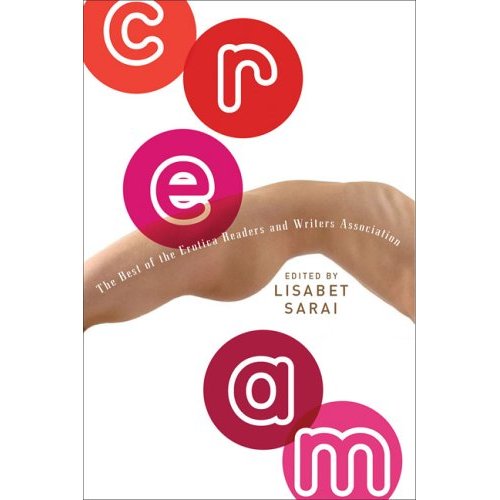
Erotica Books to ask Santa for: “Cream” and “Best New Erotica 6”


If you want to add some spice to your Christmas reading, than ask Santa to put these two anthologies under the tree for you.

“Cream: the best of the Erotic Readers and Writers Association” Edited by Lisabet Sarai

This year the Erotic Readers and Writers Association (ERWA), one of the best sites for short erotic fiction on the net, celebrates its tenth anniversary by publishing a selection of of stories that have appeared on the site in the past decade.

Lisabet Sarai, a long term member of ERWA and a talented author and editor, has put together an anthology that reflects the diversity of talent that is one of the joys of ERWA. it. She’s also included a selection of ERWA’s “flashers” – each of these one-hundred word stories punches above its weight. They are the erotic writer’s equivalent of essential oils, distillations of lust and love that are as intense and memorable.

I’m very proud to have a story “Up In The Morning” and a flasher “Punter” in this anthology.

If you’d like to know more, read this interview with Lisabet by William Dean.

“The Mammoth Book of Best New Erotica 6” by Maxim Jablowsky.

“Best New Erotica” Is one of the staples of the erotica publishing world. Every year it brings together established names and new talent to display erotica in all its forms. It’s a huge tome of a book with something in it for everyone.

Maxim was one of the first people to publish a story of mine: “Deserving Ruth” appeared in “Best New Erotica 3”. Each year since then I’ve sent Maxim a selection of stories and so far he’s always taken one for his anthology.

Maxim’s tastes are eclectic and I can never predict what will appeal. Somehow he knows my stories better than I do. The ones he selects are the ones that stay the distance. That’s one of the things that makes him such a successful editor.

This year he’s picked “Eve’s Freedom” which is a quirky piece about how love, even when unrequited, can set you free. Of course it’s also about masturbation but then that’s what makes erotica intriguing isn’t it?

Thursday, October 19, 2006

"Perfume" and a smile on the side - a movie post


I love movies as much as I love books so I thought I'd post a couple of movies things that have worked for me. Last week I went to see the new movies "Perfume: the story of a murderer".


Now I read Patrick Susskind's "Perfume" about 20 years ago when it first hit paperback. It was one of those original and compelling books that grabs hold of your imagination and just won't let go. The idea, thelanguage, the brutally frank execution of the idea, the complete immersion in the world of scent via text left me excited and illuminated.

I recommended the book to anyone who would listen and a few who didn't.


I never thought I'd be saying "Go SEE the film".


Firstly, Hollywood would never tackle something so gruesome and honest.


Secondly, how could you possibly do scent in a movie?


Yet I find myself saying "Go SEE the film".

It's not Hollywood (although some Hollywood faces are in it) its mainly German.


I
t doesn't shrink (much) from the imagery and ugliness of the book.

It does manage to convey scent graphically and convincingly

AND

the quality of the prose sublimates into wonderful lighting, perfect use of colour and inspired camera work.

Go see this. You won't soon forget it.

At the other end of the spectrum, I've just found "How It Should Have Ended" a site that gives animated satirical alternative endings to the movies we've all seen. It also has a good review section. Give it a try here

( The alternative ending to 7 - click on the graphic opposite- is my favourite)