Tuesday, May 09, 2006

"Terror Grannies" - how to make a law ridiculous in one easy lesson

From time to time I've proposed humour and ridicule as effective ways of hamstringing politicians who wrap themselves in the flag to further their own aims or whose zeal exceed their intellect and judgment. The UK now has a great example of this process at work.

Following 911 the British Government rushed through some new anti-terror laws to keep us all safe at night.

Fortunately, the British Parliament isn't as easy to stampede as Congress so we didn't end up with a Patriot Act (which still sounds like a Vaudeville show to me), instead we got the Serious Organised Crime and Police Act 2005 (as you will see, the meaning of the word "serious" is being stretched a little in the application of this Act). This sat alongside the 2000 Terrorism Act (which sounds like a new and improved toilet cleaner: "We bring you Terrorism 2000, a new solution for a new millennium").

Most of the original proposals for the new Act were kicked out but the Act still strengthens the power of the police to stop and search and takes the dangerous step of pre-defining what constitutes a terrorist act (this is very un-British - such things are normally defined after the fact).

Unfortunately, when you give the British Police a new law they sometimes feel obliged to use it and, if you didn't know better, you'd swear that the set out to do so in a way that causes the maximum embarrassment to the British Government (the Police made a formal input to the proposed Terrorism 2000 Act saying that they already had all the powers they needed.

So now we the joy of seeing the 2000 Terrorism Act and the Serious Organised Crime and Police Act 2005 being used to keep the Blair government safe from those citizens who threaten... well, disagreement, actually.

And we all know that disagreement is the thin end of the wedge used by evil doers everywhere to exploit the freedoms granted by a true democracy in order to weaken us and make us vulnerable - no , wait, scrub that, I think I was channeling the Republican Party for a moment.

So far the Acts have been used against:

  • a man wearing an anti-Blair T shirt
  • a man who heckled the Foreign Secretary by accusing him of lying
  • about Iraq
  • a woman who protested British casualties in Iraq by reading out their
  • names at the Cenotaph
  • a man who held an anti-war vigil outside parliament

But the biggest gift to Britain's press was the arrest of two women that they have christened: "Terror Grannies", veterans of Greenham Common, who set out to challenge the Serious Organised Crime and Police Act 2005 by walking across an American sentry line (good grief – must be a terrorist if they don't follow the instructions of the American military on British soil - whoops that would be American soil in Britain - my mistake).

For details of these incidents go to this blog The Reid Report: Think at your own risk

I'm sure the press won't let this go and I'm sure that the civil liberties folks in the UK will continue to find ways to push the government into making itself ridiculous.

If Voltaire had been British, I'm sure he would have said: "The price of Freedom is constant sarcasm".

Monday, March 06, 2006

How the first “real” reviews of my book “Writing Naked” helped me to understand why I wanted to be published

My first collection of short stories, Writing Naked, has been out since the beginning of the year but even though I’ve actually held a copy in my hand and I’ve seen the sales figures from Amazon, it only really came home to me that I had a book out there when I read Lisabet Saria’s review on ERWA and Kathleen Bradean's review on her blog.

As a reader, I hate reviews written by people who either didn’t get beyond the blurb at the back of the book or have no empathy with what they're reading (like the fashionably disparaging reviews of science fiction that are occasionally found in the Sunday papers in the UK).

Lisabet’s and Kathlean's reviews are the opposite of this. It’s clear that they are written by people who have read every story and who have thought about what the book means to them. Perhaps it is because they both write erotica themselves and know what makes a story work.

When Susannah Indigo (who edited the book) and I were discussing what stories made it to the book and what didn’t and what order they would appear in, we were creating something more than the individual stories themselves. Lisabet understands this. She sees the book as a sort of dialogue between the writer and the reader and she discerns patterns and themes that connect the stories and the characters in them. Kathleen focuses on the impact of the stories on her, how they slip into the mind and refuse to leave. She knows the essence of these stories, what is important about them, what makes them snag the attention.

Reading these kind of thoughtful, considered, skilfully written reviews; seeing my own words quoted back to me as evidence of a particular intent; seeing the stories summarised so that what is most important about them comes to the surface, sensing the curious but familiar intimacy that reading a writer whose stories resonate with you creates; I found myself smiling.

This was what I really wanted when the book was published: not money (I donate the fees to charity) not the feel of the printed book in my hand (fun, but it wears off too quickly to justify the effort) but the sense that there are people out there who are reading what I wrote and thinking about it and giving it meaning in the context of their own lives. I can’t think of anything more exciting than that once you’ve released the story from your head onto the page.

Take a look at Lisabet’s review and the others on ERWA –it’s a great place for finding books that people feel passionately about. Spend some time in Kathleen's blog - there's a lot more there than a review and vist "Scared Silent" to see another side of her.

Monday, February 13, 2006

Riain Grey, 5 Girls and Other Bonds Than Leather

Over at ERWA I get the opportunity to see work by some of the most talented people writing erotica today. One that caught my eye recently is Riain Grey. She has a deft touch with language and the enthusiasm of someone who has found her voice and has things she wants to say.

Riain has just had a piece called 5 Girls featured in Cleansheets. It's a beautifully constructed short story in five pieces. Each piece is like an harmonic progression. The style is sparse and evocative. The tone is sensual and self exploratory. The passion and the characterisation are soaked into every word.

Riain also runs a pretty smart website called "who i want to be" and I'm delighted to say that she's featured my story "Other Bonds Than Leather". on her site.

Take a look at Riain's site and check out some of her stories.

Wednesday, February 08, 2006

A little bit of autobiography

I’ve been working in Basel again recently, a town I’m a little in love with.

It’s an old town by Western European standards. The buildings around the Munster date back to the 14th Century and are still inhabited.

This is not some pickled-in-aspic heritage-industry town. It is a vital, dynamic place, although never flashy or loud. It’s Switzerland’s second largest city, home to their pharmaceutical industry (which explains my presence –Pharma companies attract consultants the way that horses have flies), and has a well respected university.

But this sounds too much like a guidebook. Next I’ll be telling you that Basel straddles the Rhine and snuggles up to France on one side and Germany on the other.

When you are in love with a town, you don’t describe it like this.

When you are in love with a woman you don’t offer her dress size or her body mass as description of who she is. Instead, you speak of the how the lines around her eyes are emblematic of humour, not fear; you share the memory of the weight of her hair pooling in your outstretched hand; the taste of her neck in your mouth; the guilt-propelled self-loathing that twists your stomach when you fail her; the peace the fills you when you watch her sleep; the envy you feel when irrepressible laughter breaks the surface of her concentration in the presence of her friends.

At the centre of this description lies not the woman but your love of her; not who she is but who you become when you think of her.

When you fall in love with a town, it is not the buildings or the avenues of trees or the sinuous track of the river, carved centuries deep through old stone that you fall in love with. You fall in love with the person that the city lets you become.

I lived in Basel for nearly two years at the end of the 90s, barely able to speak the language; alone throughout the week, working 12-14 hours a day, commuting back to England at the weekends.

I fell in love with a town that encouraged me to look into to myself and to learn to write, to value solitude rather than fear loneliness and to reach out across the web to people who were awake while those around me slept.

Although I lived through some hot summers in Basel, they seem like fleeting mood swings, not truly indicative of her character. For me, Basel is a city of cold winter nights, lit with bold white lights that make the frost on the tram lines sparkle. It was a town I travelled on foot or by tram, mostly alone and mostly happy. My work day would start at 7am and at least two nights a week I would try to be done by 8pm so that I could have some time to myself.

I worked on the Klein Basel (little Basle) side of the river. This has always been the rougher side – where the river traders landed their boats and spent their money on women and drink. Not much has changed. This is still the red light district, where Asian girls (very young, probably illegal, and depressingly likely to be there against their will) lean from red-lit windows and whistle to attract the attention of male passers-by and older, rounder, tougher white women stand on corners waiting for drive-thru customers who want a quickie on the way home. These days the sailors have been replaced by men in suits, attending conventions at the Messe, one of the largest exhibition halls in Europe. By day they struggle to increase the sales of ball bearings or plastic tubing or automotive components. At night Klein Basel opens its doors to their money and need: food and drink are followed by some time at the “cabaret”. It may sound strange for a writer of erotica, but these places make me uncomfortable: it’s as if the men who use them cannot or will not see what is going on. At best these are milking parlours for animals that must be squeezed and squirted on a regular basis. At worst they are places of desperate mutual exploitation. And yet, night after night, year after year they persist.

Thursday, which, in the days before e-banking, used to be pay day in Basel, is the evening for being out on the town. The shops are open later and families fill the restaurants and movie houses. On Thursdays I liked to leave Klein Basel by walking along the banks of Rhine.

Across the river the Alte Stadt (old town) sits confidently on a hill that drops sheer into the water. One look is all that’s needed to tell you this is where money and power have always resided. On a winter’s night the Alte Stadt rises like Gormenghast above the darkness of the wide flat river. Mounting the stone steps to Mittebrucke (middle bridge) the old trams look like a special effect from an RKO movie, lit in yellow on the ancient bridge.

A short walk brings me to Marktplatz (Market Place), where brightly lit shops dominated by a carefully (if garishly) restored Rathaus (town hall) echo to the rumble of trams. I always paused there to shrug off work and immerse myself in the exotic familiarity of the town before deciding whether to step into a side street and eat excellent Mexican food at La Fonda or continue on through the throngs of people in Barfusserplatz to the cinemas and restaurants in Theatrestrasse.

I loved being alone there, unknown, barely able to speak the language yet able to function

I lived in an early 19th century building converted into apartments, up the hill, near the city walls. I liked being in the heart of city. Somehow the beat of that heart makes it easier to be alone without feeling isolated.

The only problem was that Basel didn’t let me be who I should have been. It let me become who I might have been. I should have been someone who went home each night to his wife. I might have been an outsider who compensated for his almost crippling lack of small talk by chatting with semi-ghosts on the web and casting shadows on the wall of his cave with his writing. I should have been building friendships and visiting family. I might have been someone who travels so much that wherever they are feels like a hotel and friends and family take second place to sleep and recuperation.

So now, six years later, I’m back in Basel. This time I work in the centre of Basel, near the SBB Railway station. Tonight my hotel looks out over the square in front of the SBB Bahnhoff, which is lit like a movie set of a Germanic Gotham city. Large cream coloured clock faces, lit from behind so that the hands and numbers are shadow-dark, are set in broad sweeps of stone and under cupola roofs. Sparks flash from the rumbling trams. Frost sparkles on the tram lines. And even now, at midnight, there are people on foot heading for home.

I think Basel is still pretty much the same as it was but I am no longer the same person here. My home is a few hours away by train. I speak enough of the language to get by. And my heart seeks home and company. Now I come to Basel to earn the money to let me be who I want to be: someone who has time to spend with my wife and with friends, someone who writes because he has things to say rather than to break the isolation of the night, someone who can smile at Basel like a cherished ex-lover met by chance and then feel pleasure in turning his head towards home.

Wednesday, February 01, 2006

Sin Shame Sex and Erotica

I have an article in ERWA's Smutters Lounge this month called "Sin, Shame, Sex and Erotica"

The article came out of a discussion we were having on the writers' list about who we wrote erotica for and whether eroitca should be "sex positive"

Somehow that got us into a discussion about people who read our stuff but would never admit it in public and whether or not this made them up tight hypocrits.

I found myself writing about sin and shame and secrecy and how they relate to sex and erotica.

When I'd finished I realised that I'd written something that explained, to me at least, why I write some of my stories and who I'm writing them for.

Here's how the article starts:

I write about sin, shame, and secrecy a lot, not just because we're told that we should write about what we know, but because I think sin, shame, and secrecy shape the experience of sex in the lives of many people.

As a lapsed catholic it seems to me that these three form a sort of unholy trinity in our hearts they track the struggle between the pursuit of grace and the pursuit of happiness, the tension between the physical and the spiritual, and they explain the supreme gratification of doing something wrong that is nice.

Follow the link to ERWA if you'd like to read the rest.

While you're there, take a look at JT Benjamin's "All worked up about profanity" It will make you smile as well as making you think.

Sunday, January 29, 2006

Winning the Rauxa Prize for Erotic Writing


The big new in my life this month is that my story, Writing Naked won the Rauxa Prize for erotic writing for 2005.

I’m pleased of course but also a little stunned by this. 300 stories were nominated. The short-listed stories are all by talented and well known writers, including Tulsa Brown who is a long term favourite of mine. It is hard to take in that my stories are now being read alongside theirs and stranger to see the story win.

At the same time, I recognise that that particular story, “Writing Naked”, marked a progression in my writing. The title – which I also used for my book of short stories. – explains what I was trying to do. I wanted to write without restraint about what sex can be like, about what it feels to be male and how that affects the rest of your life.

This posed two problems: I wanted to write fiction, not autobiography, and I wanted to cut out the self-serving editor in my head that always wants to make me believe that everything is OK. This was not a comfortable process. I felt exposed and yet compelled to be truthful. When I’d finished I felt reluctant to release the story because it left me feeling raw. But the folks on the list at ERWA helped me to evaluate the story, test its truthfulness and gain some of the distance needed to make it better.

I hope the outcome is a story that is not about me but reflects who I am (who many men are) sometimes – with emotions and motivations that ring true – and a story that is about sex but which is not porn.

For me, porn (which I often enjoy) is about escape and wish fulfilment and urgent release and so it is, at its heart, a lie or at least a non-truth.

“Writing Naked” is a story in which sex is used to show a warts-and-all picture of man with conflicts to resolve. There are lots of ways of getting at a characters motivation and emotional state but sex is one of the most straightforward and most universal. I believe many of us experience it as a conflict in and of itself.

So much for the story, what about the prize?

The main impact on me is to encourage me to write as well as I can. I now know that I can produce good stuff if I focus. The trick is to carry on focusing. I have a slew full of stuff in my work in progress file. It’s time for me to finish some of them.

It’s traditional for the winner of a prize to thank people and now I understand why: I’m feeling thankful.

So thank you to everyone at ERWA who has provided the feedback and the encouragement to help me to strive to write well.

Thank you to Susannah Indigo and the Rauxa Foundation for offering the prize.

And thank you to the judges for taking the time to read everything and for giving me the incentive to write more.

Oh, and did I mention the cash? The Rauxa Foundation awards a $1,000 cash prize.

My alter-ego, he who sells his time and talent to large corporations, makes a reasonable living so I’ve always donated fees for my stories to charity. I like to get paid because it encourages a commercial market for erotica but I find it simpler not to pass the cash through my bank. Instead I ask the publishers to make a payment directly to charity.

The Rauxa Prize is more than twice what I would earn from my stories in a year. I want to make sure it goes to a good use. Both of my parents died of cancer so at the moment that’s top of my list but a little voice keeps nagging at me to do something that encourages literacy.

Anyway, I’m sure I’ll work it out.

For now I’m just going to hug to myself the idea that my writing has been noticed. I like the feeling and I want more of it. Time to stop writing this blog and get back to writing fiction

Saturday, January 28, 2006

Best Reads of 2005

In many ways, 2005 was a difficult year for me, grappling the illness and death of those close to me, dismissal from my job and tensions at home. It was also a year of reassessment, reflection and (I hope) growth: I started a new business, had my first short story collection published and got my first contract for a novel.

Through all of this, books kept me company and helped me to channel my thoughts and emotions. Sometimes they helped me to escape from the here and now and sometimes to understand it better. I’ve picked out the ones that meant the most to me. I commend them to you and hope that some of them might make your 2006 better.

The True and Outstanding Adventures of the Hunt Sisters by Elizabeth Robinson

http://www.amazon.co.uk/exec/obidos/ASIN/0743469054/qid=1135938785/sr=8-1/ref=sr_8_xs_ap_i1_xgl/026-4459863-6730040

This was my favourite book of the year. It made me laugh and cry in equal measure, it gave me insight into the world of movie script writing, and it did interesting things with the form of the novel that made me finger itch with the need to type.

The opening lines are a classic:

“I was sitting at home yesterday (where else?) working on the fourth draft of my suicide note when I got the call. I resented the interruption and nearly didn’t answer the phone. I was having a hard time getting the tone right and, as we’ve discussed, tone is everything in correspondence.”

This mixture of immediacy, intimacy, humour and underlying sadness, wrapped up in an understanding of language and form is what makes this book special.

The novel is told in a series of emails and letters. This is not an easy thing to pull off without the machinery of the novel starting to creek in a distracting way but Elizabeth Robinson has the talent needed to turn her device into something fresh and vital that taps into how we really communicate with others (and ourselves) today.

The novel is written from the point of view of Claire Hunt, a film producer who has just been fired from her studio job but is still determined to make a movie based on “Don Quixote”. Then she hears that her sister is ill and she has to return from life on the margins of the Hollywood machine to a family home that she has outgrown but never really left and which is besieged by the illness and the spectre of death.

The strength of this book comes from its truthfulness and honesty. Reading it takes you inside Hollywood and inside a family filled with love and fear and hope and loss.

I felt as if I had found a friend that I’d always want to have a place in my life.

I know I’ve found an author who has the technical skill and emotional honesty to be ranked up there with the best of them.

The Time Traveller’s Wife by Audrey Niffenegger

http://www.amazon.co.uk/exec/obidos/ASIN/0754095754/qid=1135939304/sr=8-1/ref=sr_8_xs_ap_i1_xgl/026-4459863-6730040

It is rare to find a book that crosses so many boundaries that it can be classified on with reference to itself but this is one of them. The plot premise would place it as science fiction (a man with an illness that transports him randomly back and forth along the timeline of his life). The relationships would make it a romance novel (true love that extends beyond the constraints of time and place). The twists and turns of the plot would place it as a thriller.

It is all of these things and none of them. This is a first novel that is illuminated by an original imagination and crafted with enormous skill. The writing is beautiful, especially the dialogue which is real and vibrant.

It is also a brave book. Who but the brave would write about a relationship between a grown man and little girl who subsequently becomes his wife and yet be certain that there is no whiff of exploitation or prurience?

Audrey Niffenegger has conceived of a world in which the only constant is the love between two people. She makes us believe in that world so that the reader sees the passionate commitment between Claire and Henry as not only right but necessary.

For me, the most breathtaking thing about this novel is its apparently effortless fusion between the time line flexibility we see in modern movies and the strong, sequential, narrative thrust we expect from a novel.

In my view, this book has a complex but convincing message; we are all, to some extent time travellers. Relationships are tested, strengthened and weakened by our ability to find moments in time when we can travel together in the same direction and at the same speed. Our memories of the past and our expectations of the future shape our experience of the present in such a way that nothing is fixed. We anchor ourselves to reality through our love of another and the pressure that love creates for us to be true to ourselves.

This book is an easy and enjoyable read. It bursts upon the tongue with a rich set of flavours, but the true pleasure comes from the lingering aftertaste as the ideas and characters settle in your mind and create a new and different understanding.

This is being made into a movie with Brad Pitt and Jennifer Aniston. Just the thought of what they might do to this is enough to make me shudder. Read the book before you see the movie.

Hateship, Friendship, Courtship, Loveship, Marriage by Alice Munro

http://www.amazon.co.uk/exec/obidos/ASIN/0099422743/qid=1135943653/sr=8-4/ref=sr_8_xs_ap_i4_xgl/026-4459863-6730040

Alice Munro is a long time favourite of mine. She writes short stories that have the impact of novels. She reconnects you to what it is to be human without any sentimentality but with a lot of truth and a dash of love and hope. I reread this collection this year and none of the nine stories have lost their savour.

The last story in the collection “The Bear Came Over the Mountain” is probably one of the best short stories ever written. It looks at love, lust, betrayal, loyalty, memory and forgiveness and leaves you feeling understood and hopeful.

Nobody’s Fool by Richard Russo

http://www.amazon.co.uk/exec/obidos/ASIN/0099574918/qid=1135943709/sr=8-2/ref=sr_8_xs_ap_i2_xgl/026-4459863-6730040

My wife introduced me to Richard Russo’s work a while back when she bought “Empire Falls”. He has the gift of writing about ordinary people in a way that helps you to understand how extraordinary we all are.

He understands that, in a small town, each of us is a bit player in another person’s drama and that each day is to some extent, an act of ensemble improvisation.

In “Nobody’s Fool” Richard Russo works through the relationships between fathers and sons and friends and enemies. Along the way he creates a main character who is a flawed as he is believable, a stubborn man, swept along by his own legend, but finding ways to reassess himself in a changing world.

Richard Russo pulls no punches when it comes to understanding people’s ability to hurt each other and themselves but he also helps us to see that each day is full of choices that help us to close the gap between who we are and who we want to be.

This one has also been made into a movie, with Paul Newman as the main character. The film is faithful to the book and the acting is first rate but the film-craft doesn’t match the richness of Russo’s language.

The Jane Austen Book Club by Kay Joy Fowler

http://www.amazon.co.uk/exec/obidos/ASIN/0141020261/qid=1135939425/sr=8-1/ref=sr_8_xs_ap_i1_xgl/026-4459863-6730040

This is a book for bibliophiles. The structure is ingenious: each chapter focuses on a character in an informal book club that has been assembled only to read Jane Austen and each chapter reflects the content of the Austen book being read. The touch is light and the tone optimistic. If you love Austen this book is a joy. If you’ve never read Austen, it will be an education. This book made me smile and whetted my appetite for reading other things. Its only flaw is that it is a little light on emotional content but only in the same way that “Emma” leaves a gap with “Wuthering Heights” so perhaps this is deliberate.

Again this has a wonderful opening sentence:

“Each of us has a private Austen.”

If that resonates with you then you’ll certainly have fun reading the rest.

The Black Magician Trilogy (The Magician’s Guild, The Novice, The High Lord) by Trudi Canavan

http://www.amazon.co.uk/exec/obidos/ASIN/1841493139/qid=1135944047/sr=8-8/ref=sr_8_xs_ap_i8_xgl/026-4459863-6730040

This trilogy was my top find of 2005. I’m a long time fantasy and science fiction fan and I’m always on the look out for new writers. Trudi Canvan just went to the top of my list. These were her first books and they have the freshness and energy of something long imagined but newly realised.

Trudi Canvan write prose and dialogue that are easy to read so that even in books as long as these you don’t feel that the same stock phrases are being repeated or that the book has thinned out to the level of a film script outline.

Each book stands on its own. Each book expands our knowledge of the world and changes our perspective on the characters in it. All three books hang together into a consistent piece that stands up to re-reading from end to end.

Oh, and the story rocks. This is a page turner about a young girl from the slums with latent magical powers that she accidentally unleashes on a member of the Magician’s Guild as they are doing their annual expulsion of the poor from the streets of the city.

What happens to the girl, the people who befriend her and those who try to harm her would be enough to satisfy most authors, but Trudi Canvan has gone beyond that to look at the nature of magic and the societies it shapes. In the end this story is about the Guild itself and the line that must be walked between strength and weakness, good and evil, what can be done against what should be done.

Add Trudi Canvan to your author list and settle down for hours of quality time stretching your imagination, cheering for the good guys, booing the bad ones and trying to puzzle out who is which.

Past Mortem by Ben Elton

http://www.amazon.co.uk/exec/obidos/ASIN/0552771236/qid=1135943915/sr=8-2/ref=pd_ka_2/026-4459863-6730040

Ben Elton made his name as a stand up comic and then as the script writer for TV comedies like “Black Adder”. In his novels he picks up on some social trend and puts it under the microscope. The result is closely plotted, witty, gritty, that invite you to look again at the taken for granted.

Past Mortem looks at the “Friends Reunited” phenomenon and instead of seeing sugar-coated reunions of long-lost friends, imagines the consequences of reuniting adults with the people who made their childhoods miserable. The main character is a Scotland Yard detective on the trail of a serial killer. Ben Elton pulls no punches with this one: the murders are gruesome, the sex scenes are graphic and extreme, the consequences of remember humiliation are real enough to make you cry. There is still humour and wit in this book but it is the kind that humour that helps you survive in the world you live in.

I think this is his best book so far. If you like this, try “Dead Famous” which looks at the “Big Brother” phenomenon or “Popcorn” which looks at the impact of Tarantino style violence in movies.

Petrified by Barbara Nadel

http://www.amazon.co.uk/exec/obidos/ASIN/0747267219/qid=1135943827/sr=8-1/ref=sr_8_xs_ap_i1_xgl/026-4459863-6730040

“Petrified” is one of series of crime books by Barbara Nadel set in Istanbul. I’ve been hooked since I read the first one, “Balthazar’s Daughter”. The compelling thing about the books is the credibility of the characters that Nadel draws. The Turkish detectives in her novels progress from book to book, they change and develop. Bad things happen to them and how they respond is a measure of their humanity. The sense of place is very strong in each book – Istanbul itself is a central character in the novels.

Each of Barbara Nadel’s books stands alone. Each has a theme and each theme displays new things about the characters and the nature of Turkish society. Petrified takes art, death and obsession as its themes. The results are memorable and rich.

Skinny Dip by Carl Hiaasen

Carl Hiaasen is a crime reporter in Miami. His novels are larger than life romps into the messes created by greed and arrogance. His books have a formula to them: nasty men doing bad things, usually to nice women, run up against tough loners with a sense of honour who just have to intervene. What keeps the formula fresh are Hiaasen’s wit and his ability to summon up believable villains and enjoyable heroes.

Skinny Dip is the latest offering. A man throws his wife off a cruise ship, meaning to kill her but forgetting that she was in the school swimming team. She washes up on the beach of our capable, grumpy-but-likeable hero with a soft spot for damsels in distress and the two begin to plot revenge.

This is the American version of pantomime and is thoroughly enjoyable from the first page to the last.

Market Forces by Richard Morgan

http://www.amazon.co.uk/exec/obidos/ASIN/0575075120/qid=1135944276/sr=8-4/ref=pd_ka_4/026-4459863-6730040

A Scottish academic who teaches politics and writes science fiction, Richard Morgan has been hailed as the leader of the new wave of cyberpunk and the success to William Gibson. His first book, “Altered Carbon”, redefined hard-boiled science fiction with its mixture of innovative technology, mercenary attitudes, noir-crime ethos, and scorching no-holds-barred sex.

“Market Forces” is Richard Morgan’s third book and it is in a class of its own. Here he leaves behind the far-future space-opera setting and looks at Britain in the very near future. And a depressing, nasty and all too possible Britain it is: enclaves for the rich, institutionalised road rage contests to win consulting contracts, lawless slums for the poor and a political machine that has become indistinguishable from the economic market it should be regulating. Following the domino recessions of the early 21st century, the Brits now make their money by financing and arming small wars around the world. “Conflict Investment” is managed by consultancies that compete literally to the death.

Our hero is good at conflict investment. He has everything needed to become a partner except a regrettable lack of willingness to kill the competition. The book shows what happens to moral scruples when native ability meets profitable opportunity.

The story is hardcore action, with graphic violence and sex and yet the main thrust is still and intellectual and moral one.

The world Morgan describes is only a slight exaggeration on the testosterone driven consultancy partnerships that I’ve worked for. The relationship between those having the small wars and those funding them is an extension of the current practices of the World Bank and the IMF. Morgan has a wicked ability to imagine the worst and help you to taste it.

Odd Thomas by Dean Koontz

http://www.amazon.co.uk/exec/obidos/ASIN/0553584499/qid=1135944366/sr=8-2/ref=sr_8_xs_ap_i2_xgl/026-4459863-6730040

Dean Koontz has never quite achieved the recognition given to Stephen King (King has been published in the New Yorker a number of times and has written a (very good) book on writing. Koontz covers similar territory to King and is even more prolific. Perhaps it is the sheer number of books that has given him that never-mind-the-quality-feel-the-width, airport-paperback reputation. Or perhaps it is that, while he is a talented storyteller, his themes are straightforward and he does nothing new with form.

I’ve enjoyed many of Koontz’ novels, but in a disposable, pleasant-afternoon-in-front-of-the-television sort of way. Odd Thomas is different – mould breaking different. This is the kind of mystery thriller John Irving might write. The structure of the book is clever, the writing is crisp, the characters are engaging and the plot will keep you guessing. Settle down for a good read that will stay in your mind long after you’ve closed the book

Sunday, January 15, 2006

A sad day in Pakistan

Yesterday, in my eyes, the United States stepped over the line and became a terrorist state.

The CIA sent war drones to bomb a village in Pakistan where they believed the second in command to Bin Laden was present.


The last time that the US bombed this man they blew up his house,killed his wife and children but missed him.


This time they killed 18 people, many of them women and children and wounded more.

Up until now I’d thought that Bush’s "War"on terror was a marketing spin to give him the remit to act on a war footing without the requirement to actually declare war on anybody.


Now I see that it goes deeper than that. Some parts of the US government now feel able to take military action against any town or village in which they believe their enemy resides. At one time this would have been on the I-don’t-believe-that edge of a Tom Clancy novel. Now it is official policy.


Here’s how it seems to me.


The US has attacked an ally, an ally that has nuclear weapons, an ally that was already having problems holding back fundamentalists segments of their society, an ally that has a history of military coups.


This will cause huge problems in Pakistan. It also has to raise the question about what the US would do if they believed an enemy was in France (who, like Pakistan, have nuclear weapons, are not part of NATO and have a problem with Muslim fundamentalists in a secular state).


What makes this worse is that the US executed its attack using the CIA – not the US Army. A generation fed on “Alias” might not be aware of this but the CIA is distrusted and hated throughout the world, including America’s allies. It is an organisation with a history of screw-ups, torture, sponsorship of proxy wars, attempted assignations and a complete inability to protect America from terrorist attacks.


The fact that the US used unmanned drones so that there was not the slightest risk of American body bags on TV threatens to turn acts of war into a video game.


It wasn’t a game for the men women and children the CIA killed yesterday.


This attack is so stupid and so pointless that it makes me weep with frustration, anger and grief.


This is unacceptable.


This will breed hatred of America, weaken alliance, and promote Bin Laden’s cause.


This should see the US facing censure at the United Nations


This turns America into a terrorist state.


My best hope is that Congress will repdudiate this action and show the world that America is still part of the international community and hasn't become simply a rich warlord.

Saturday, January 07, 2006

Starting 2006 in Print and on the Web

For my first blog of 2006 I thought I’d give some background on some recent publications in print and on the web.


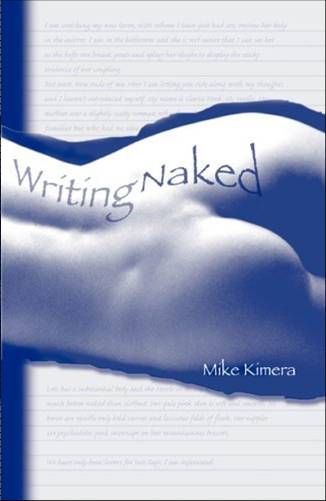
I’m very pleased to say that my first ever short story collection Writing Naked is now available from Amazon.

There were some problems with publishing last year and people trying to buy the book were faced with a wait.

Now, if you want to settle down with a 200 pages of my best stories, you can get the book immediately from Amazon.

Here’s how the book is described:

In “Writing Naked”, Mike Kimera takes an original, unflinching look at the secret desires we all have: the uncontrollable sexual needs, the surprising -- and sometimes funny -- turn-ons, our dirty inner-lives that are rarely shown the light of day.

Through a lust for large women, 4 a.m. porn downloads, bonds other than leather, and men who like to be tied up, this book of short stories is a searing revelation of what truly goes on behind closed doors.

These are the furtive thoughts and shivering daydreams that tell us exactly who we are, especially in our erotic lives.

If you read “Writing Naked” please post a review on Amazon.


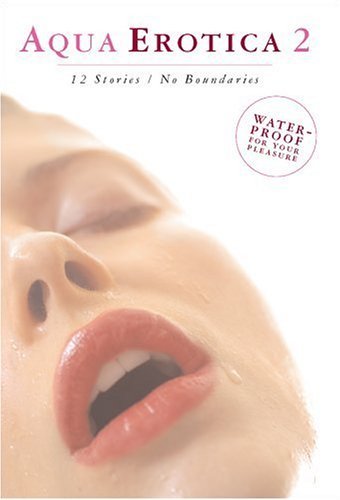
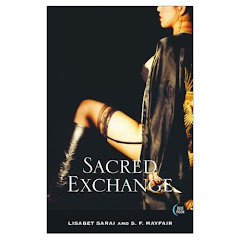
My “Postcards” story is in the newly published Aqua Erotica 2 edited by MEGAN WORMAN

One of the distinctive things about this anthology is that it’s waterproof and perfect for reading in the bath.

The common theme of the twelve stories in the anthology is crossing sexual boundaries.

“Postcards” is about how a passionate married couple deal with the separation imposed by business travel by using erotic internet “postcards” to keep them focused on each other. In the process they discover more about their desires and cross some new boundaries in their relationship. This is a romantic story strongly spiced with D/s fantasy.

Aqua Erotica 2 has stories some well known names in it and I’m pleased to be in their company

Too Nice a Person by Thomas S. Roche
Taking It All by Rachel Kramer Bussel
Postcards by Mike Kimera
How We Play by Debra Hyde
Just Tell Me the Rules by Cecilia Tan
The New World by Simon Sheppard
Entry Point by Shanna Germain
Forget-Me-Not by Cheyenne Blue
The Yacht People by Michael Hemmingson
Out of the Closet by Bill Noble
See You Down There by Steve Almond
The Marrying Kind by Mary Anne Mohanra
j

Sex and Laughter now that’s a combination I’m all in favour of.

Susannah Indigo has done a great job in creating an anthology that really will make you laugh out loud but is still hot and sexy.

I have a story called “Santa Claws” about a Christmas Eve encounter between a demon, Santa Claws, and a nice girl who was once naughty and now has to pay the price. Oh and did I mention that Claws has a 36” penis in the shape of a whip?

Susannah herself has one of the best stories in the book "Stuck Inside the Uh-Oh's With the Red State Blues Again"

Greg Wharton and Many Ann Mohanraj both add to the fun,

This is a book that lifts the spirits (and may elevate other parts of the anatomy)


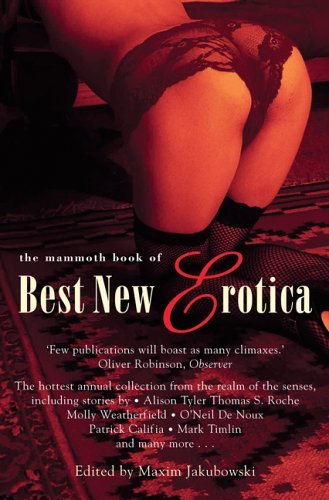
Best New Erotica 5

This is the latest collection from Maxim Jakubowski

I have a story called "I want to watch you do it" which is, of all things, a romantic comedy piece about a guy who's girl friend has a strange request

You'll also find lots of other ERWA writer in here.

Maxim has a knack for finding the best that people have written in any given year so try this book out - you won't be disappointed.


While it’s fun to be published in print, my real home is still the internet and one of my favourite places there is the Erotic Readers and Writers Association
ERWA.

The biggest accolade you can receive on ERWA is to have your story placed in the Treasure Chest (use link). This is ERWA’s permanent archive and I strongly recommend it to you as a rich source of top grade erotica of every flavour and style.

The Treasure Chest was updated in January and I’m proud to say that I have two stories there.

In the “Quickies” section (stories of 1,200 words or less) I have Burger Queen This can be a disturbing read and was a brave choice for the Treasure Chest. “Burger Queen” is written from the point of view of a sociopath with a sexual fixation on a young woman at his local Burger King. It was one of those stories where I felt as if I was just writing down what the main character was saying inside my head. One reader of this story said “I work with sociopaths and your story rings true to their state of mind.” That was pleasing and chilling at the same time.

In the “Erotic Fiction” section I have Living with it: Up in the Morning This is, I hope, the first of a series of stories written from the point of view of a man who has just turned 50. I’m 49 this month, honest, but that feels close enough. The stories aren’t autobiography but they are intended to be a frank and honest look at sex and the 50+ married male. The “Living with it” part of the title is there because the series is about “living with” erections and the various things that cause them.

The first in the series tackles the early morning erection, sexual fantasy, masturbation and the reality of sex in the marriage bed. I think the next one will be called “Living with it: window shopping” and will tackle all those images and close proximity non-contact encounters that don’t count as cheating and yet, somehow, leave their mark on your conscious, your aspirations and your bed-sheets.

My guess is that we’ll have more of this kind of fiction now that the men of the baby-boomer generation have grey hair on their balls.

At the back of my mind lurks a story that starts with a woman (naked, in a hotel bed that is now tousled but not yet finished with) listening to her (illicit) lover shower and saying to herself: “Men in their fifties are exciting because they know what they want and how little time they have left to get it.” She’s smiling as she says this but even she doesn’t know if the smile is ironic, affectionate or bitter. As she waits for her lover she thinks back on the men she has known, what they wanted, what they got and how that makes her feel.

Of course that’s just one of a dozen or so voices currently trying to make themselves heard. I’ll let you know if she makes it to the page.

Saturday, December 17, 2005

Flying Kites in Thunderstorms – why writers of erotica go beyond what they know

There is a discussion in the writers’ forum in ERWA at the moment over the role of reality in erotic writing. One member was puzzled about why writers who are straight and male write stories from the point of view of gay men or straight or gay women. Why, she asked, would we want to write about a world we know nothing about?

For me the, answer to her question is that I write fiction, not biography.

The stories of mine that I like the most are truthful, but they are not true.

I think the art of fiction is to lead the imagination to discover truth through dissemblance. It is the epistemological equivalent of perspective in two dimensional art: a means of directing attention and providing context without dictating semantic value.

In erotic fiction, sex is a lightning rod for the soul. What pleases, what disgusts, what tempts, what comforts, what excites and what frightens people about sex is like the DNA of their psyche; either who they are defines it or it defines who they are depending on which side of the nature nurture debate your comfort zone lies. That art of erotic fiction is to use those lightning strikes to illuminate the readers understanding.

This is not about testimony, or witness or life-style documentary: it is about sparks of imagination that leap the gap between what you have experienced and what your heart knows to be true.

I’ve written stories from the point of view of straight and gay men and women, young and old from many nationalities. Sometimes my characters are nice people you’d invite into your home and sometimes they’re scary people you wouldn’t want to be alone with. I’ve written about sexual experiences I’ve never had and I’ve written about sexual experiences I’m very familiar with. I’d like to think that my reader’s wouldn’t know which is which.

What enables and compels me to do this are the voices in my head. I shut down my finely trained analytical mind and let my imagination delve into my curiosity, my insight, and my intuition to summon up a voice. Then I listen hard and write what the voice tells me.

In other words, I go looking for those lightning bolts of lust that belong to others and not to me. I fly kites in the thunderstorms of other people’s sex lives to capture the spark and pass it on to others.

When this works well, it seems involuntary. The stories produced in this way remind me of those glass artifacts that are formed by lightning rods stuck into sand in the path of a storm. The rod channels the energy but the storm creates the glass.

So why would I imagine myself in a world I know nothing about?

Because, in reality, all worlds are like that.

Because I hunger to capture the unknown.

Because the voices in my head thrive on my ignorance.

Because that’s what writing fiction is really about: to enable the reader to know a world from your words and sense the truth in the consensual delusion.

Wednesday, October 26, 2005

Humour, hate and something that’s just not funny

Tony Blair is, I’m sure; a well intentioned man of principal who wants to get things done that will make the world a better place. In other words he is the most dangerous Prime Ministers Britain has had since Thatcher. Graham Green once described innocence as a leper roaming the world without a bell. Blair goes one step further than this; he’s a leper who wants to shake hands with everyone.


Imagine the dismay when Tony, (he insists his colleagues call him Tony – likeable chap that he is), after helping George W liberate Iraq and remove the imminent threat of weapons of mass destruction that could be launched in less time that it takes to call a press conference, it turns out that most of the Arab world see him as part of an invading army of the west, intent on destroying Islam. Good grief, some of them got so upset about it, they even bombed London.


Now Tony has nothing against the Muslim world. He’s a tolerant man, married to a prominent Catholic woman (Tony of course is not allowed to be Catholic and Prime Minister at the same time although I suspect he may “discover” his faith at the end of his present term of office) and he supports religious freedom. To Tony, it is unacceptable that people should be hated simply because of the religion they follow. Hate, he has explained to us, is a Bad Thing. Hate gets people so upset that they blow up buses and trains and kill all the people on them. Any self-respecting Government would therefore feel the need to make promoting religious hatred a crime. Then we call all live together in peace and harmony.


This of course is to misunderstand the legal process to an extent that is almost wilfully naïve. You can’t write a law that says “Thou shalt not hate the next chap just because of the God he prays to”, you have to get a bit more specific than that. And those nice law makers that Tony put on the job have been much more specific, and the more specific they have been come, the more ludicrous the legislation they propose becomes.


Anyone who reads my blog will know that I think humour is a great political weapon. It seems that Tony’s lawyers agree with me. Unfortunately to them that means that humour is now one of the Bad Things that need to be banned. Their propose legislation would make it illegal to satirise religion – any religion of any kind. To satirise something is to promote disrespect of that thing which is pretty damn close (at least in the clubs that these lawyers are members of) to promoting hatred.


So if my religion holds that women are biologically subversive and need to be locked out of sight lest men be corrupted by them and lose their immortal souls in a fit of lust, I am not supposed to snigger or say “you can not be serious” in a McEnroe type voice. I’m supposed to stay calm and say “Well, everyone’s entitled to their opinion.”


Even if the person I’m speaking to believes that God has been pretty clear that everyone is NOT entitled to their opinion and everyone except the chosen will burn in torment for all eternity, I’m still not supposed to suggest that this is a self-serving view of God and that any omnipotent being who chooses that path should have his beard burnt off rather be worshipped. No, I’m supposed to nod and say, “You might have a point”.


Rowan Atkinson, known around the world as Mr. Bean and known in England as the Black Adder, is so incensed by the stupidity of a law that say that just because it’s religious you can’t make fun of it, that he has taken the time to explain to the lawyer chaps, clause by clause, why their legislation is insane. Sadly, they looked at him and said, “Well you may have a point, Rowan, but Tony’s rather keen on all this so the show must go on.” Rowan has promised to write a comedy sketch in breach of the new laws if they are passed, just to provoke a prosecution and give some of the funniest men in England a chance to explain why Tony needs his ass kicked.


By the way, in writing the Atkinson story up, the Sunday Times quoted a joke that would be frowned upon by the proposed laws, so let me share it with you.


“How do you know that Jesus was a Jew?”


“Because he was still living at home at 30 and his mother thought he was God”.


So now on to the distinctly unfunny story that caught my eye this week. A while ago I read a book called “Market Forces” by Richard Morgan. It’s a hard hitting book set in a near future Britain where consultants for privatised war firms win business by fighting to the death in a kind of choreographed road rage. It was a depressingly plausible read that I found difficult to dismiss from my mind. The characters in the book have a toast, “To Small Wars” as these are the ones that bring the biggest bonus payments. This week, I discovered that truth continues to challenge fiction. The Americans have privatised the policing of Iraq and have brought in a few thousand hired guns at $1,000 a day.


The activities of the 50 plus firms that currently operate in Iraq are coordinated by “Aegis Defence Services” who also employ 75 teams of their own. Aegis is British firm, run by Lt Col Tim Spicer,a former Scots Guards officer, which describes itself as risk-management and private security company or PSC. Aegis is a small outfit by PSC standards and yet the Iraq contract alone was worth $293 million. If you want to get a flavour for the enterprise, visit their website: http://www.aegisdef.com/


Spicer is a controversial figure in Britain. He won the OBE in Northern Ireland, was accused of illegally exporting arms (and then was cleared when he demonstrated that he was under orders from the UK government at the time. He led troops who were convicted of murdering an unarmed Irish teenager. Take a look at this open letter to Comptroller General of the US Government Accountability Office if you are interested in the details: http://www.serve.com/pfc/pmcbride/04olpfc.html or take a look at these two articles http://www.williambowles.info/ini/ini-0266.html and http://www.williambowles.info/ini/ini-0266.html


There are 50 PSCs operating in Iraq. Competition is tough so Special Forces types are in big demand to demonstrate the value of the company they belong to. This has in turn placed recruitment pressures on the public sector – the US Army now offers $150,000 cash bonus to re-enlisting Special Forces troops. So it seems Richard Morgan was not being fanciful after all. I’m sure there are few ex-Sandhurst chaps in the City toasting small wars as you read this. Still, at least they won’t be doing a Bad Thing like poking fun at a religion.